When Did You Last Check Your Smoke Alarms?
Smoke alarms sit quietly in the background until you need them. Regular testing is a simple property-maintenance task, but it is also one of the easiest to forget.
Why smoke alarm checks matter.
A working smoke alarm gives you time to get out if there is a fire. That only works if the unit has power, the sensor is clear, and someone has confirmed it still sounds.
Because alarms rarely need daily attention, months can pass without anyone pressing the test button. A short monthly check is enough to catch a dead battery or a unit that has stopped working.
How often should you check your smoke alarms?
Test every smoke alarm at least once a month. Press and hold the test button until the alarm sounds, then release it.
If you have more than one alarm, test each unit. Interconnected alarms should sound throughout the property. A unit that stays quiet needs attention before the next month comes around.
If an alarm chirps, do not wait for the monthly check. That sound usually means the battery is low or the unit is reaching the end of its life.
What should you check?
A full check takes a few minutes.
Walk the property and confirm each alarm still works.
Press the test button
Hold the test button until the alarm sounds. If it does not, the unit needs a new battery, a reset, or replacement.
Confirm every alarm responds
Walk through the property. Interconnected alarms should sound together. Note any unit that stays silent.
Look at the unit itself
Check for dust, cobwebs, paint on the sensor, or a loose mount. A blocked or damaged alarm cannot do its job.
Check the date on the back
Most smoke alarms have a manufacture or replace-by date. If the unit is past that date, replace it even if it still beeps.
When should batteries be replaced?
If the alarm uses replaceable batteries, change them at least once a year, and as soon as the unit starts chirping. Testing after you replace the battery confirms the alarm still sounds.
Many newer alarms have a sealed 10-year battery. Those units do not take a new battery. When they fail a test or reach the end of their life, replace the whole alarm.
When should the smoke alarm itself be replaced?
Most smoke alarms should be replaced about every 10 years. The manufacture or replace-by date is usually printed on the back of the unit.
Replace it sooner if it fails a test after a new battery, is damaged, has been painted over, or no longer sits securely on the ceiling or wall.
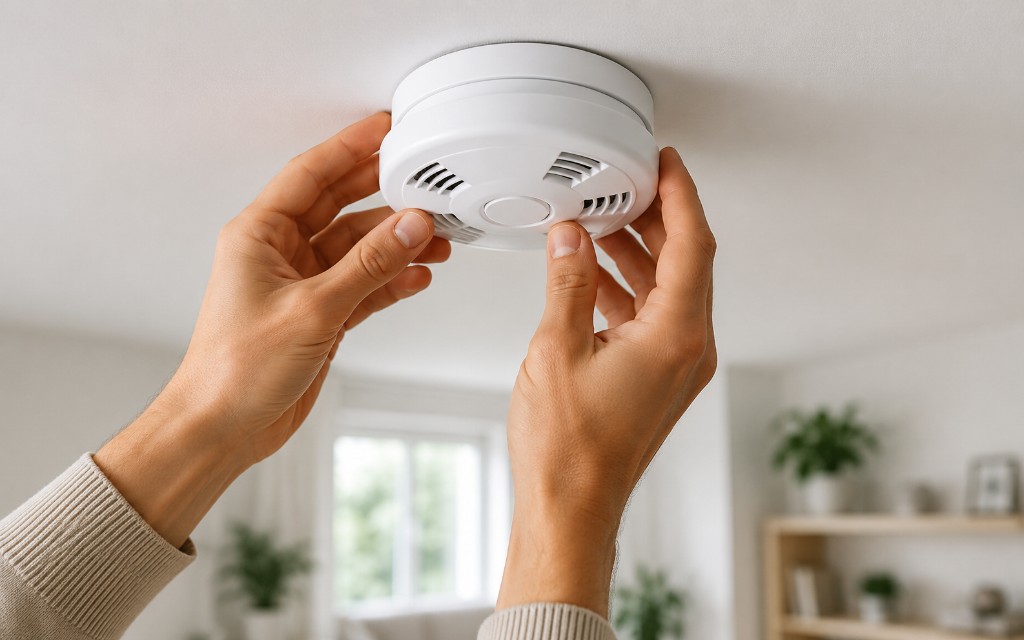
Need a new smoke alarm?
If your alarm is due for replacement, explore popular smoke alarms for your property.
View on AmazonAmazon • Paid link
Keep smoke alarm maintenance organized.
The hard part is rarely the test itself. It is remembering that last month’s check already happened, and knowing when the next one is due.
In House Passports, you can save smoke-alarm testing as a recurring maintenance task, record when it was last completed, and see when it is due again. That check then becomes part of the property’s maintenance history instead of a note you might lose.
Browse more property maintenance guides as they are added, or start tracking this task in your property record.
Smoke alarm checks,
in short.
How often should I test smoke alarms?
Test smoke alarms at least once a month using the test button. Use a repeating reminder so the check does not depend on remembering a calendar date.
When should I replace smoke alarm batteries?
Replace replaceable batteries at least once a year, and immediately if the alarm chirps. Sealed 10-year units do not take new batteries — replace the whole alarm when it fails or reaches the end of its life.
How long do smoke alarms last?
Most smoke alarms should be replaced about every 10 years, or sooner if they fail a test, are damaged, or have passed the date printed on the unit.