Check Under Your Kitchen Sink
A slow leak under the kitchen sink can stay hidden behind bottles and cleaning supplies until the cabinet is already damaged. A short look now is easier than a repair later.
Why small under-sink leaks are easy to miss.
Cabinets stay closed, cleaning supplies block the view, and a leak can start as a drop every few minutes instead of a puddle on the kitchen floor. Water soaks into the cabinet base long before it is obvious from above.
Because the sink still works, months can pass without anyone looking underneath. A short check of the valves, lines, and drain is enough to catch a problem while it is still small.
Empty the cabinet before you look.
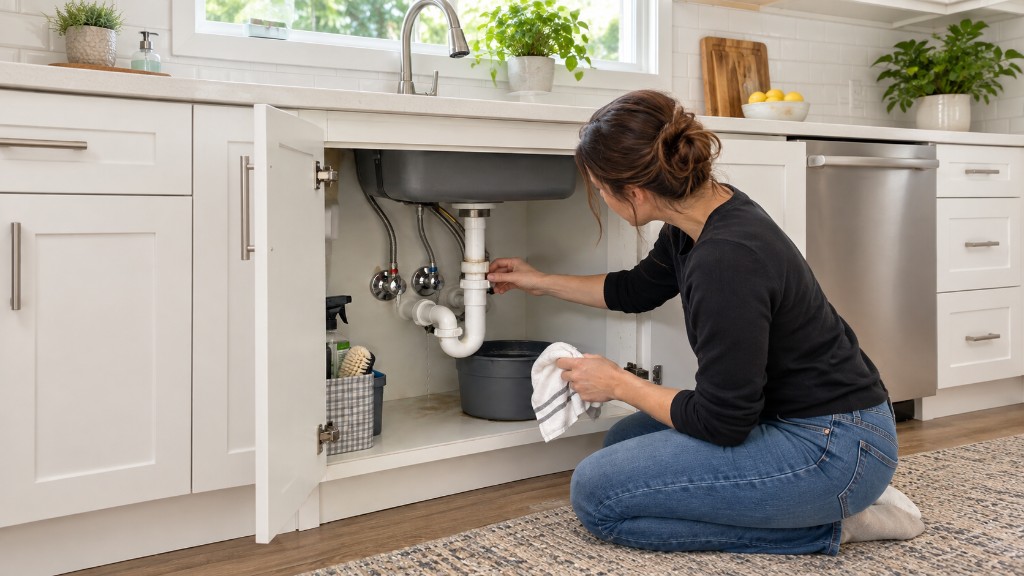
Take everything out first. You cannot see shutoff valves, supply lines, or the P-trap clearly with bottles and bins in the way.
Dry the cabinet floor with a paper towel, then leave a fresh one down while you inspect. A flashlight helps on dark cabinet backs and around fittings. Any new dampness will show up on the towel.
What should you check under the sink?
Start with the water supply, then move to the drain.
Look for moisture, not just active dripping.
Shutoff valves
Look at the hot and cold valves. Check around the handles and where each valve meets the pipe for moisture, mineral crust, or a slow drip.
Hot and cold supply lines
Follow each flexible line from the valve to the faucet. Check both ends and any fittings for corrosion, kinks, or dampness on the line itself.
Drain connections
Inspect where the sink drain meets the tailpiece and where pipes join. A loose slip nut or worn washer can leak only when the sink is in use.
The P-trap
The curved pipe under the sink can leak at either slip joint. Look for drips, white mineral trails, or a trap that sits crooked.
Run the faucet while you inspect.
With the cabinet empty, run both hot and cold water. Watch the supply connections while water is on, then fill the sink and let it drain so you can see the drain joints and P-trap under load.
A fitting that looks dry at rest can drip as soon as water moves through it. Feel around connections with a dry finger or paper towel if you are not sure whether a surface is just cool or actually wet.
If a dishwasher drain hose ties into the sink plumbing or disposer, check that connection too. Look for a loose clamp, a damp hose, or water around the inlet on the drain tee.
Look for dripping, stains, and moisture damage.
Watch for active dripping and any surface that feels damp. Water stains, dark rings, or a tide line on the cabinet floor mean water has been there before.
Swollen, soft, or peeling cabinet material means moisture has already soaked in. Discoloration on wood, particle board, or the wall behind the cabinet is another warning. A musty smell under the sink often means moisture has been sitting there longer than a single drip.
What to do if you find a leak.
Turn off the hot and cold shutoff valves under the sink. If those valves do not stop the water, shut off the main supply. Catch standing water and dry the area so you can see where it was coming from.
Tighten a connection only if it is clearly loose and you are comfortable doing so. For a cracked line, a valve that will not close, or damage you cannot see clearly, call a plumber.
Take photos of the leak, the wet area, and any damaged cabinet material before you clean it up. Photos help a plumber see what you found, and they give you a record of the issue if you need to follow up later.
Looking for a water leak detector?
A water leak detector placed under your kitchen sink can alert you when moisture or leaking water is detected, helping you catch a small leak before it causes more damage.
View on AmazonAmazon • Paid link
Keep under-sink checks organized.
The hard part is rarely the inspection itself. It is remembering when you last looked, and keeping photos and notes if something did not look right.
In House Passports, you can save an under-sink check as a recurring maintenance task, attach photos of what you found, and keep notes with the rest of your property record. House Passports helps you keep property maintenance, photos, notes, and important home information organized in one place.
Browse more property maintenance guides as they are added, or start tracking this task in your property record.
Kitchen sink leak checks,
in short.
How often should I check under the kitchen sink?
A quick look every few months is enough for most homes, and any time you notice a musty smell, a soft cabinet floor, or water where it should not be. Take everything out of the cabinet so you can see the valves, lines, and drain clearly.
What are the first signs of an under-sink leak?
Look for damp spots, active dripping, water stains, swollen or soft cabinet material, discoloration, and a musty smell. Mineral crust around a fitting can also mean water has been seeping for a while.
What should I do first if I find a leak?
Turn off the hot and cold shutoff valves under the sink. If those valves do not stop the water, shut off the main supply. Catch standing water, dry the area, and call a plumber if the leak continues or the damage is more than a loose connection.
Why should I take photos of a leak?
Photos of the wet area, the fitting that is leaking, and any damaged cabinet material help a plumber see what you found. They also give you a record of the issue if you need to follow up later.